Waterjet Cutting Custom Parts, Blanks, and Shapes

posted in: Machining Services | 0

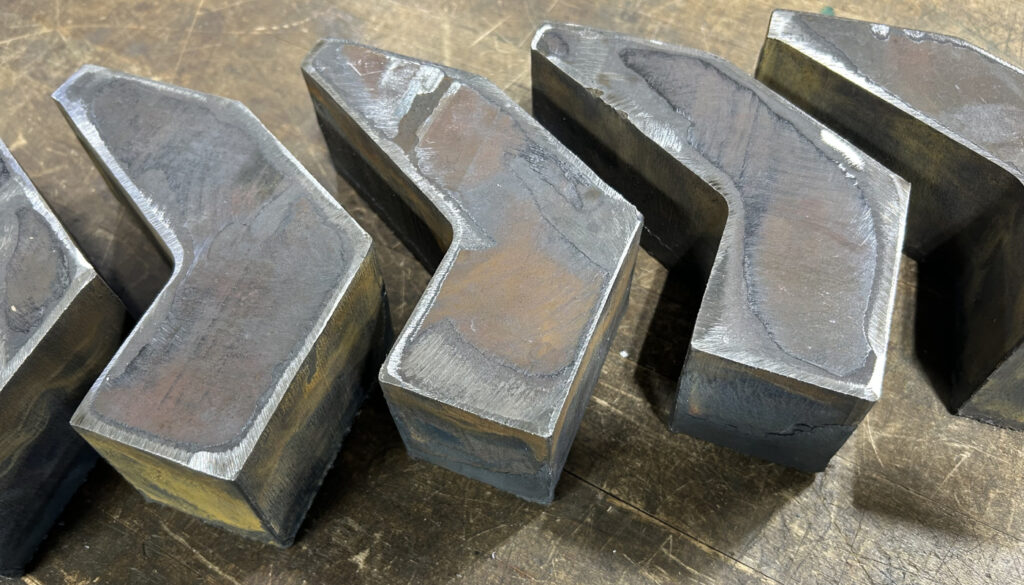
Waterjet cutting is one of the most versatile manufacturing processes available today. From simple blanks to complex cutouts, it has become a dominant method for cutting custom parts and shapes from metals, composites, and plastics alike.

At Trim Tool & Machine, waterjet cutting is one of our most utilized services. We bring our machinist’s knowledge to every job — understanding your needs and ensuring every part performs exactly as intended. For many parts, waterjet is just the first step. We routinely follow up with drilling, milling, turning, and other secondary operations to take your parts from raw material to finished product.
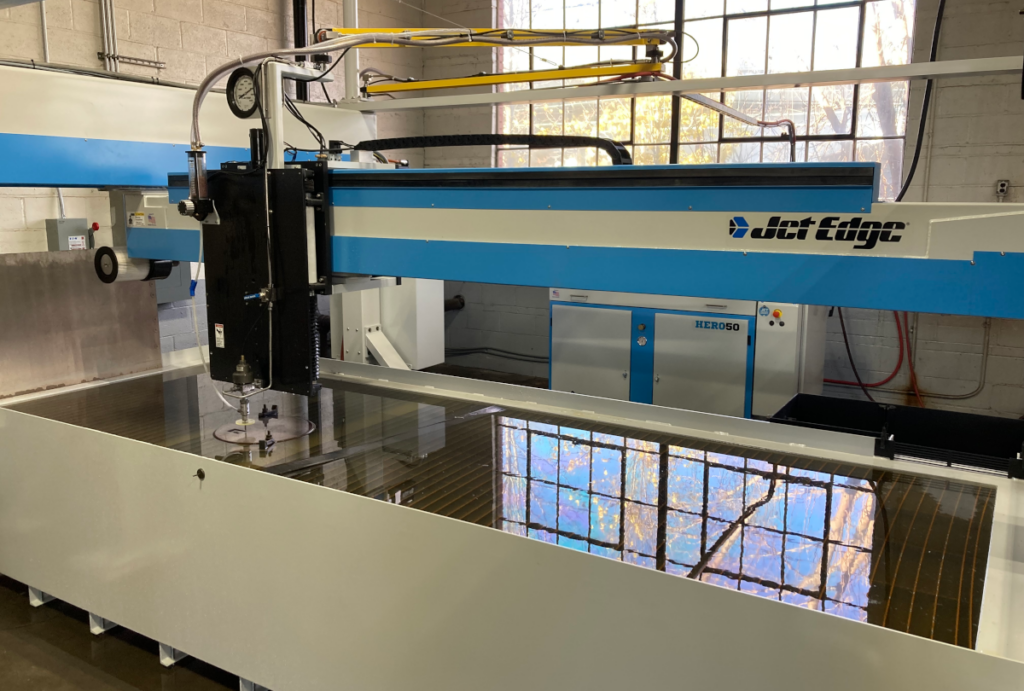
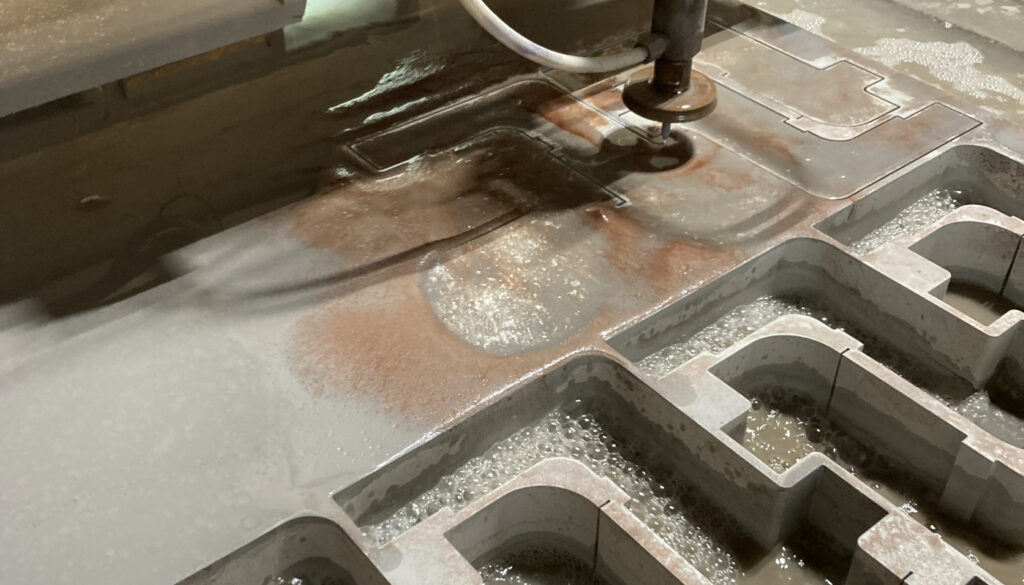
Jet Edge Abrasive Water Jet machine

Materials

One of waterjet’s greatest strengths is its ability to cut virtually any material. Unlike other processes that use heat to create cuts, waterjet cutting does not affect the material properties at the cut edge. Commonly cut materials include:

Metals:

  • Steel, tool steel, hardened steel
  • Stainless steel
  • Aluminum and aluminum alloys
  • Titanium
  • Copper and brass
  • Nickel
  • Inconel and other exotic alloys

Plastics:

  • Delrin (acetal)
  • UHMW
  • Nylon
  • Polycarbonate
  • ABS
  • HDPE
  • PVC

Composites/Other:

  • Fiberglass
  • Neoprene
  • Carbon fiber composites
  • Ceramics, tile, stone, and granite

Parts, Blanks, and Shapes

The waterjet is suited for a wide range of part types — from simple flat blanks to complex profiles. Commonly cut parts include:

  • Panels and plates
  • Brackets and gussets
  • Frames and structural components
  • Enclosures and covers
  • Flanges and mounting plates
  • Gaskets and seals
  • Spacers, shims, and shim packs
  • Wear pads and wear components
  • Guards and heat shields
  • Bases
  • Friction material
  • Glass
  • Blanks for further machining
  • Prototypes
  • Testing coupons

Material Thickness and Tolerancing

Trim Tool & Machine commonly cuts steel and aluminum plates up to 6 inches thick. Thicker material requires slower cutting speeds but is well within the waterjet’s ability.

Typical cutting tolerances are in the range of +/-.010″. Material type, thickness, feature size, and part requirements all influence what is achievable. For applications where tighter tolerances are required, secondary machining operations can bring these features to size.

Benefits of Water Jet Cutting

Waterjet cutting offers a number of advantages:

  • No heat affected zone — material properties are preserved
  • Cutting of virtually any type of material
  • Capable of cutting thick plate — up to 6″ thick steel and aluminum
  • Clean cut edges
  • Tight inside corners — radii as small as .02″
  • Fast set up
  • Stacked cutting for thin materials like shims or washers
  • Parts delivered clean — free of garnet, water, and residue
  • Deburred

Secondary Machining Operations

Waterjet cutting is frequently the first step to finishing a part. At Trim Tool & Machine, we routinely perform secondary machining operations on water jet cut parts in-house, eliminating the need for our customers to source. These operations include:

  • CNC milling
  • Drilling and tapping
  • Countersinking
  • CNC turning
  • Grinding
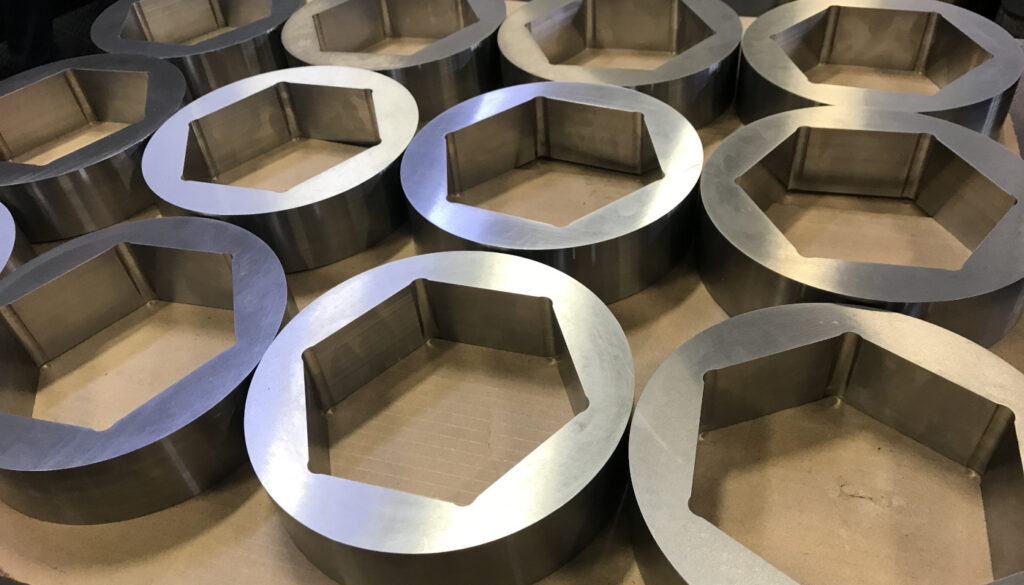
  • Machining cut edges to final size and specification

Handling everything under one roof can reduce overall lead times and simplify the process for our customers.

Ready to Get Started?

Waterjet is an ideal process for parts where precision, edge quality, and material integrity matter. The bulk of our waterjet work serves manufacturers cutting plates, brackets, blanks, and custom components. Waterjet’s versatility extends to signage, architectural elements, and unique custom applications as well. If you have a project that’s a good fit, we’d like to hear about it.

Trim Tool & Machine has been providing precision waterjet cutting services in Cleveland, OH for 25 years. We ship to every U.S. state. Contact us today by emailing sales@trimtoolmachine.com or request a quote online. Please provide drawings and/or CAD and quantities required.

Machining Parts from a Sample with No Drawing or Print

posted in: Machining Services | 0

If you’ve ever needed a replacement part only to find out it’s been discontinued, the original supplier is gone, or a drawing never existed — you know how frustrating that situation can be. Whether a component has worn out after years of use, an OEM no longer supports it, or you simply need more of a part that used to be made in-house, a full service machine shop can help.

Whether it’s one replacement part or hundreds, we are often called on at Trim Tool & Machine to help this situation. We can work from physical samples when drawings don’t exist and deliver finished parts that fit and function like the original.

Replacement gears machine from samples

When Drawings Don’t Exist

Sometimes engineering drawings no longer exist, or were never made in the first place. Sometimes the old machine shop down the road made a component but they are no longer there. In other cases, a part was designed decades ago and its documentation simply didn’t survive.

That’s where reverse engineering comes in. By working from a physical sample, a machine shop can take precise measurements, create drawings and CAD in order to create the part again and make future reorders straightforward.

Common Scenarios:

This type of work comes up more often than you may expect. It happens when:

  • Parts wear down after years of use or break unexpectedly
  • OEM parts are discontinued without available replacements
  • Custom parts with no original drawing on file
  • Legacy equipment is no longer supported by the manufacturer
  • Parts that a company uses regularly and needs made in quantity

Making Parts from a Sample

It is common for companies to have a small part that they use regularly such as a bracket, a wear pad, a spacer, a custom fitting — and they need 50, 100, or more made. There may be no drawing, just the sample from off the shelf or pulled from the equipment.

Sometimes the parts are simple. Sometimes they are more complex. Regardless of complexity, the goal is always the same: produce a new part that fits and functions like the original.

When the parts are geometrically complex, they often require significantly more work to replicate accurately.

How the Replication Process Works:

The first step is getting the part in-hand and learning if there is any supporting information available. Even partial documentation can be helpful like an old purchase order, a rough sketch or a spec sheet. It’s critical to figure out the material type and whether characteristics like hardness or surface finish are important to the part’s function.

From there, the sample is carefully measured and all relevant dimensions recorded. For complex or geometrically challenging parts, a CMM (Coordinate Measuring Machine) inspection may be used to gather data that would otherwise be difficult or impossible to capture manually.

Once measurements are complete, drawings and CAD models are created. These documents and files become the foundation for machining the new component.

Material Selection

When a drawing doesn’t exist, the original material spec is often unknown. In these cases, machine shops will use tools and work with the customer to identify the best material. Visual inspection, hardness testing, and existing knowledge can help guide the team to the right material choice.

In some cases, material selection can be upgraded — making the new material a better choice than the original.

Think Ahead: Order Extra

For one-off or low quantity replacement parts, this is an opportunity for the buyer to decide if they should order a few extras to put on the shelf. It can eliminate future downtime.

Who Needs This Service?

Part replication and reverse engineering comes up across many industries:

  • Automotive and stamping operations with aging tooling
  • Equipment builders and rebuilders
  • Die casting
  • Food processing and packaging
  • Conveyor and material handling systems
  • General manufacturing with custom or proprietary components

Have a Sample that Needs Replicated?

If you have a component that needs replaced, copied, or produced in quantity and you’re not sure where to begin, contact Trim Tool & Machine today. You can use the Quote Form, email sales@trimtoolmachine.com, or just drop off the sample. We’ve been delivering precision machining solutions for over 25 years and would be glad to help you today.

Machining Aluminum Extrusions

posted in: Machining Services | 0

There are many benefits to making parts from aluminum extrusions. Some common aluminum extrusions can be purchased right off the shelf, including round bar, pipe, tube, channel, angle, architectural trims, framing rails, and other structural profiles. These standard shapes are widely available from metal distributors and are often used as raw material for fabricated or machined parts.

When a specific cross-section profile is required that is not available in standard stock shapes, manufacturers may produce custom aluminum extrusions using dedicated extrusion dies. Custom extrusion processing allows manufacturers to create profiles that fit the needs of their specific applications.

Additional machining operations are often necessary to finish take these raw extrusions and turn them into a finished part. Many manufacturers rely on machine shops that specialize in machining aluminum extrusions to add holes, slots, threads, and other features required for finished parts.

How an Extrusion is Made

Aluminum extrusions are made by heating aluminum billet and forcing it through the opening of a die. This process creates long, consistent shapes with the desired cross-section and is the first step in producing an extruded profile.

After extruding, the material is cooled, straightened, and cut into manageable lengths. Whether extrusions are purchased off the shelf or produced as custom profiles, further processing is often required to bring the part to its final specifications.

Examples of Products Where Extrusions Are Used

Aluminum extrusions are used in a wide range of applications where a consistent cross-section shape is beneficial. Some common examples include:

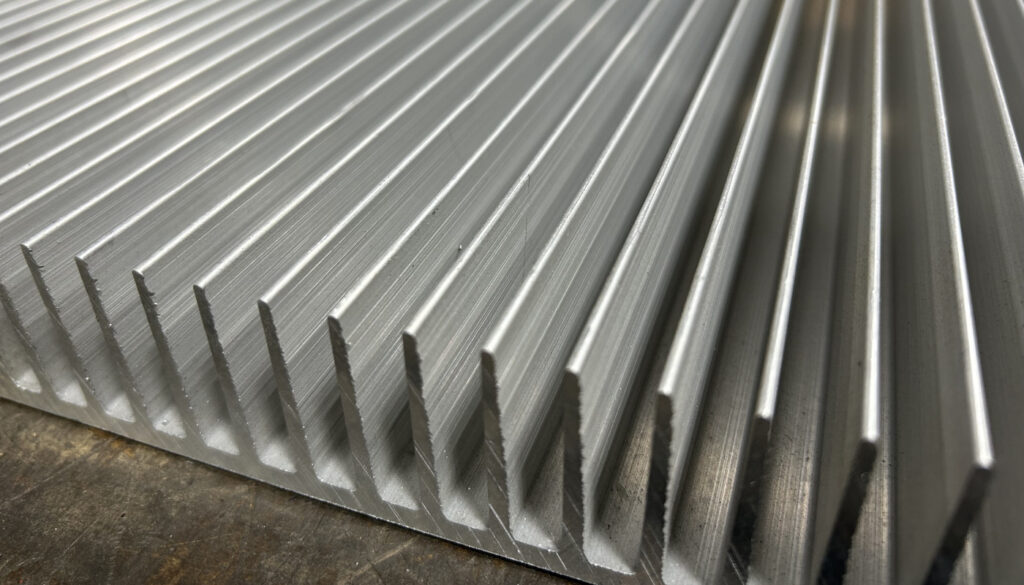
Heat sinks
Heat sink extrusions often contain thin fins that allow for heat dissipation. These profiles are widely used for electronics cooling, LED lighting systems, power supplies, and other components that require thermal management.

Structural framing
Extruded aluminum framing is commonly used in industrial environments for custom equipment, workstations, safety guarding, and conveyor systems.

Window and door frames
Architectural aluminum extrusions are widely used in window systems, sliding door tracks, and storefront framing.

Electronic enclosures
Many instrument housings, control boxes, and electronic enclosures are made from aluminum extrusions, which may include internal features for mounting components.

Transportation components
Extrusions are also used in products such as ladder rails, roof racks, railings, and other lightweight structural components.

Machining Aluminum Extrusions

Extrusions are sometimes produced with additional material so they can be finish machined to the required dimensions and tolerances.

Extruded shapes often require machining such as holes, slots, threads, precision surfaces, or other features needed for the finished part. Machine shops that specialize in machining aluminum extrusions can perform these secondary operations to bring extruded profiles to their final dimensions and functional requirements.

Trim Tool & Machine offers secondary machining of any type of extrusion, and for any quantity. Their machining expertise can create custom workholding solutions to fixture extrusions for all machining operations. Extrusions can be machined complete at Trim Tool & Machine, or workholding fixtures can be developed for use at your business or machine shop to fit any type of CNC or manual machine.

Common Machining Operations for Aluminum Extrusions

Common machining operations performed on aluminum extrusions include:

• Cutting extrusions to length
• Milling slots, pockets, and surfaces
• Drilling and tapping holes
• Machining faces
• Creating mounting features or clearance areas
• Deburring sharp edges

These operations allow extruded profiles to be converted into finished parts ready for assembly or installation.

Machining Challenges with Aluminum Extrusions

While aluminum extrusions offer many advantages, machining them can present unique challenges depending on the profile design, wall thickness, and length of the material. Challenges include:

  • Thin walls, fins, or ribs that can flex during machining
  • Vibration and distortion for thin-walled extrusions
  • Burrs

Proper workholding, cutting methods, and deburring techniques are required to be successful.

Machining Other Types of Extrusions

While aluminum is the most common base metal for extrusions, extrusions can be made from different metals and materials.

Some examples of other materials that can be extruded include:

Copper and brass extrusions
Often used in electrical components, heat transfer systems, and plumbing applications.

Plastic extrusions
Materials such as PVC, nylon, polyethylene, and other plastics are commonly extruded into tubing, channels, and profile shapes.

Magnesium extrusions
Used in applications where lightweight structural components are required, particularly in aerospace.

Steel extrusions
Used in structural or specialty applications like firearms where higher strength materials are needed.

Discuss Your Extrusion Needs & Machining Requirements

Trim Tool & Machine provides machining services for all types of extrusions used in a variety of industrial applications. Whether working with standard stock extrusions or custom profiles, we can machine features and dimensions needed to complete the part.

If you have extrusions that require machining, you can submit drawings and specifications through the Quote Request Form or email sales@trimtoolmachine.com to begin discussing your project.

Our experience in machining aluminum extrusions can help manufacturers turn raw extruded profiles into finished components ready for production use.

Machining Burnouts, Blanks and Cutouts

posted in: Machining Services | 0

What Are Burnouts?

Burnouts are custom shapes cut from flat plate. Burnouts will often have additional stock on the profile of the shape and the thickness in order to be finish-machined to size later. Your specific application will determine what you actually need.

A36 steel custom shape burnouts ready to be machined

Burnouts, blanks, and cutouts common material types

These can be made from nearly any type of metal or material but are often:

  • Hot Rolled Steel (HRS) including A36, 1045, A514, A588 Corten, A606 Corten, and floor plate
  • Cold Rolled Steel (CRS) including 1018 and similar
  • High strength low alloy (HSLA) including A572
  • Wear resistant plate including AR400 and AR500
  • Alloy Steel including 4140 Heat Treated
  • Stainless Steels including 316 and 304
  • Aluminums include 6061 and Cast aluminum tooling plate

Inputs for creating burnouts, blanks, and cutouts

These four inputs are required for creating flame-cut burnouts and other blanks:

  1. Type of metal
  2. Thickness of metal
  3. Shape of burnout
  4. Quantity

The shape of the burnout can be described in two different ways. The first way is simply by stating as text only. Examples:

  • Squares: 2″ THICK x 11-1/2″ SQ
  • Rectangles: 2-1/2″ THICK x 9-1/4″ WIDE x 18″ LONG
  • Rounds: 16-1/2″ DIA x 3/8″ THICK
  • Rings: 15″ O.D. x 9″ I.D. x 1-1/2″ THICK

The second way to express the shape, if not a common geometric shape as stated above, is by providing a CAD drawing of the shape created using CAD software. For any custom profiles, providing a .dwg or .dxf file will often be enough.

How are burnouts, cutouts, and blanks are typically made:

Common tolerances for burnouts / blanks / cutouts:

Tolerancing will vary based on the thickness and size of the burnouts, and the processing method used to create the burnout or blank. Burn tolerances are often +/- 1/16″ for steels up to 2 or 3 inches thick. Water Jet cutting tolerances are typically +/-.01″ for steels, stainless steels, aluminum, copper, and titanium up to a couple inches thick.

Water Jet cutting vs. flame-cut burnouts

The Water Jet cutting and laser cutting equivalent to a burnout is often called a blank or cutout. The same inputs are required to create these as to create a burnout: material type, thickness, shape, and quantity. A major difference with processing via Water Jet cutting is that tighter tolerances can be held and much more complex shapes can be cut. The process of Water Jet cutting does not affect the material properties the same way that burning does because Water Jets do not use heat to cut the material. Instead, they cut using high pressure water and abrasives like garnet.

Water Jet cutting blanks from aluminum plate

Benefits of Water Jet cutting:

  • You can cut ANY type of material including all metals, plastics, glass, composites, etc.
  • Improved finish on any cut surfaces
  • No heat affected areas so the materials properties do not change
  • Tighter tolerances, requiring less post operation machining

Finish Machining for Burnouts and Plate Cutouts

Often, creating the burnout or blank is just the first step to achieving the final product. Secondary machining operations are likely necessary to finish the required features. And even sometimes, a burnout made via plasma or oxy cutting will also require Waterjet cutting for certain features or complex shapes that burning cannot achieve alone.

Most often, a burnout or blank will require drilling, tapping, milling, turning, and/or grinding.

Trim Tool & Machine and similar machine shops can provide these services for customers who need burnouts or blanks finish machined to final specifications. Trim Tool offers Water Jet cutting, CNC machining including CNC milling, CNC turning, grinding and manual machining operations. Whether it’s a one-off part, prototypes, or many pieces, they can provide machining expertise for any sized quantity.

Trim Tool & Machine can supply your burnouts and blanks from all varieties of materials, and process to your finish-machined requirements. They can mill, turn, or grind the top and bottom surfaces of burnouts to achieve a nice machined finish and bring the stock thickness to size.

Steel spacers machined to print

Typical machining operations for plate burnouts and cutouts:

  • Milling, drilling, tapping
  • Machining slots and pockets
  • Turning outside diameter, inside diameter, steps, and features
  • Grinding top and bottom, Blanchard grinding
  • Squaring or finishing the sides of burnouts

If you need something machined, send Trim Tool & Machine the machining details, drawings, and specifications by emailing sales@trimtoolmachine.com or by using the Quote Form.